What Temperature Should Water Be for Coffee?
Water for coffee should be between 90.5 and 96°C, the range recommended by the Specialty Coffee Association. That's just off the boil, so boil the kettle and leave it for around 30 seconds. On cold mornings, aim for the top of that range and warm your mug and brewer first, because cold kit pulls heat out of the water quickly.
Key points
- The ideal range is 90.5 to 96°C, which is roughly 30 seconds after the kettle boils
- Water that's too hot brings out bitterness, and water that's too cool leaves coffee sour and thin
- Lighter roasts suit the hotter end of the range, and darker roasts suit the cooler end
- In winter, preheat your mug and brewer so the water stays in range
- Pour coffee off the grounds once it's brewed to keep it tasting fresh
Why Does Water Temperature Matter for Coffee?
Hot water dissolves the flavours locked inside ground coffee. Within the 90.5 to 96°C range, it draws out sweetness, acidity and body in balance. Water that's too hot extracts harsh, bitter compounds. Water that's too cool can't extract enough, so the cup tastes sour, weak or flat.
Can You Use Boiling Water for Coffee?
Water straight off the boil is a few degrees too hot for most brewing methods. It can scorch the grounds and push the cup towards bitterness. Leaving the kettle to stand for around 30 seconds brings it down into range. If you have a variable temperature kettle, set it to between 92 and 96°C.
What Water Temperature Is Best for Each Brew Method?
|
Method |
Water temperature |
Brew time |
Tip |
|
Cafetière |
93 to 96°C |
Around 4 minutes |
Preheat the jug, and pour all the coffee out once plunged |
|
V60 / pour over |
92 to 96°C |
Around 3 minutes |
Rinse the paper with hot water to warm the dripper |
|
AeroPress |
85 to 92°C |
1 to 2 minutes |
Many AeroPress recipes use cooler water for a smoother cup |
|
Stove top |
Just off the boil, poured into the base |
Until it gurgles |
Starting with hot water stops the coffee sitting on the heat too long |
|
Espresso |
Set by the machine, usually 90 to 94°C |
25 to 30 seconds |
Small volumes cool fast, so warm the cup |
Moon Roast has a video brew guide for each of these methods.
Does Roast Level Change the Ideal Water Temperature?
Lighter roasts are denser and give up their flavour less easily, so they suit the hotter end of the range. Darker roasts extract more readily, and slightly cooler water helps keep them from turning bitter. Moon Roast's core collection is roasted light to medium, so water at around 94 to 96°C suits most of the range.
How Can You Tell the Water Temperature Without a Thermometer?
Boil the kettle and leave it for around 30 seconds before pouring. In a cold kitchen, or with a large kettle, the water holds its heat for a little longer, so 30 seconds is a good rule of thumb. For a full kettle, a minute is fine.
Why Does Coffee Go Cold So Quickly on Winter Mornings?
A cold mug, cafetière or dripper takes heat out of the water as soon as you pour, and a cold room keeps cooling the coffee as it brews. On a winter morning, water that starts at the right temperature can drop below it before brewing is finished. Pour hot water into the mug and brewer, leave it for a minute and tip it away just before you brew.
How Do You Keep Coffee Hot for Longer?
Pour all the coffee out of the cafetière once you've plunged it. Coffee left on the grounds keeps extracting and turns bitter. Pour any extra into a preheated flask or a second warmed mug. For the commute or the dog walk, an insulated cup such as the Moon Roast x YETI Rambler keeps coffee hot far longer than a ceramic mug. Try not to reheat coffee in the microwave, as it brings out bitter flavours.
How Much Coffee Should You Use?
A good starting point is around 60g of coffee per litre of water. Adjust from there to suit your taste.
|
Brew size |
Coffee |
Water |
|
One mug |
15g (about 2 heaped tablespoons) |
250ml |
|
Two mugs |
30g |
500ml |
|
Small cafetière (3 cup) |
21g |
350ml |
|
Large cafetière (8 cup) |
60g |
1 litre |
Which Moon Roast Coffees Suit a Cold Morning?
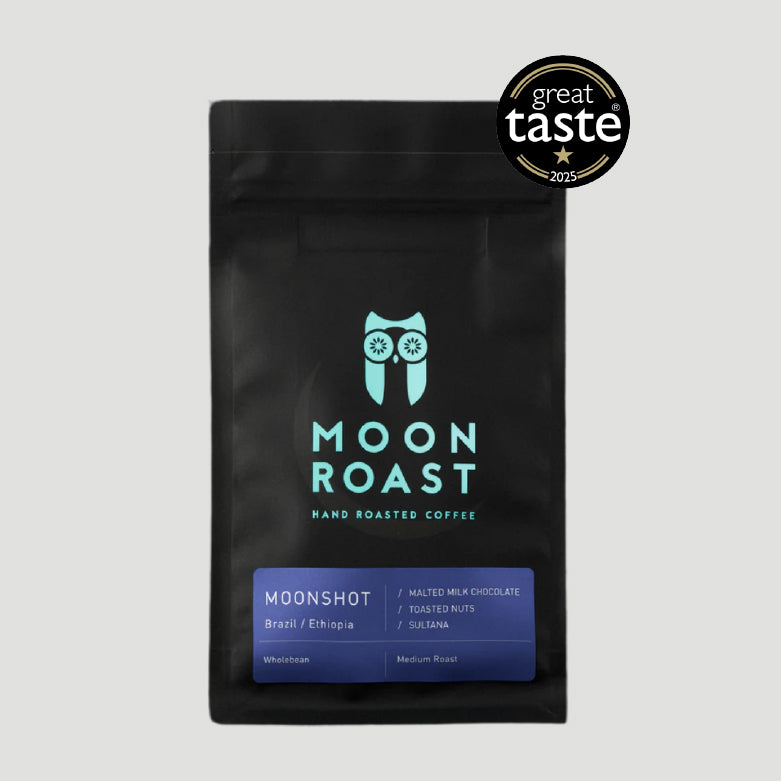
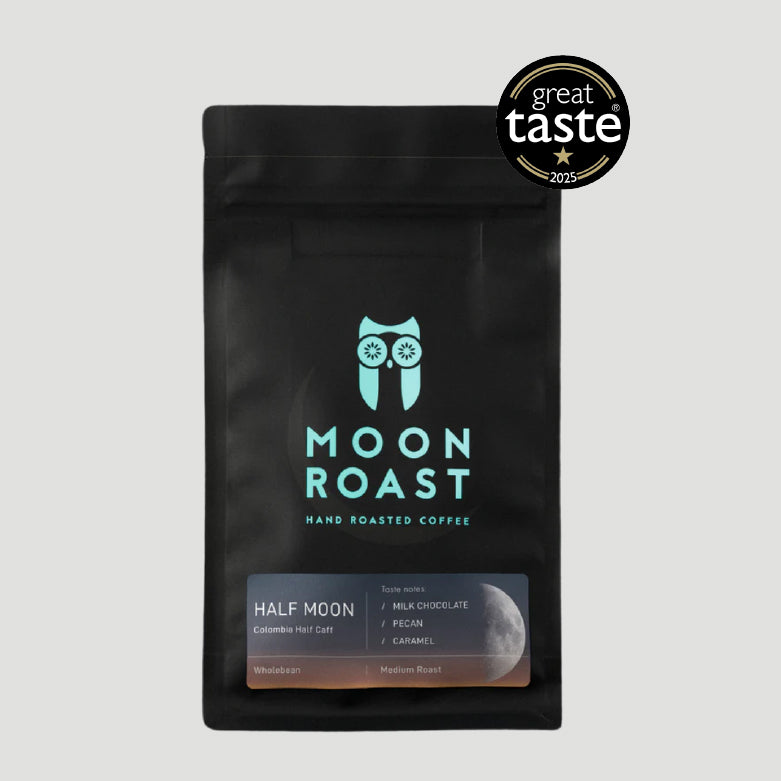
Medium roasts with chocolate and dried fruit notes make a comforting winter cup. Candover has notes of chocolate orange, dates and black cherry. Lunar is brighter, with dried apricot, honey and forest fruits. Both suit cafetière, pour over, AeroPress, espresso and stove top. For a gentler start, Half Moon is a Colombian half caff.
Frequently Asked Questions
Is 100°C too hot for coffee?
For most methods, yes. Boiling water can scorch the grounds and make the cup bitter. Let it stand for around 30 seconds first.
Why does my coffee taste sour?
Sour coffee is usually under-extracted. The water may be too cool, the grind too coarse or the brew too short. Try hotter water and preheat your brewer.
Why does my coffee taste bitter?
Bitter coffee is often over-extracted. Common causes are water straight off the boil, a grind that's too fine, or coffee left sitting on the grounds after brewing.
What temperature should water be for a cafetière?
Between 93 and 96°C, which is around 30 seconds after the kettle boils. Brew for four minutes, then plunge slowly and pour.
Does water temperature matter for decaf coffee?
Yes. Decaf brews best in the same 90.5 to 96°C range as regular coffee.
About the author
Clementine looks after all things marketing at Moon Roast, from the website and branding to social media and newsletters. Usually found with a camera in hand, she helps share what Moon Roast looks like day to day, both in and out of the Roastery.
Last reviewed: October 2026